Best Bluebonnet Photo Spots Near Austin (2026)
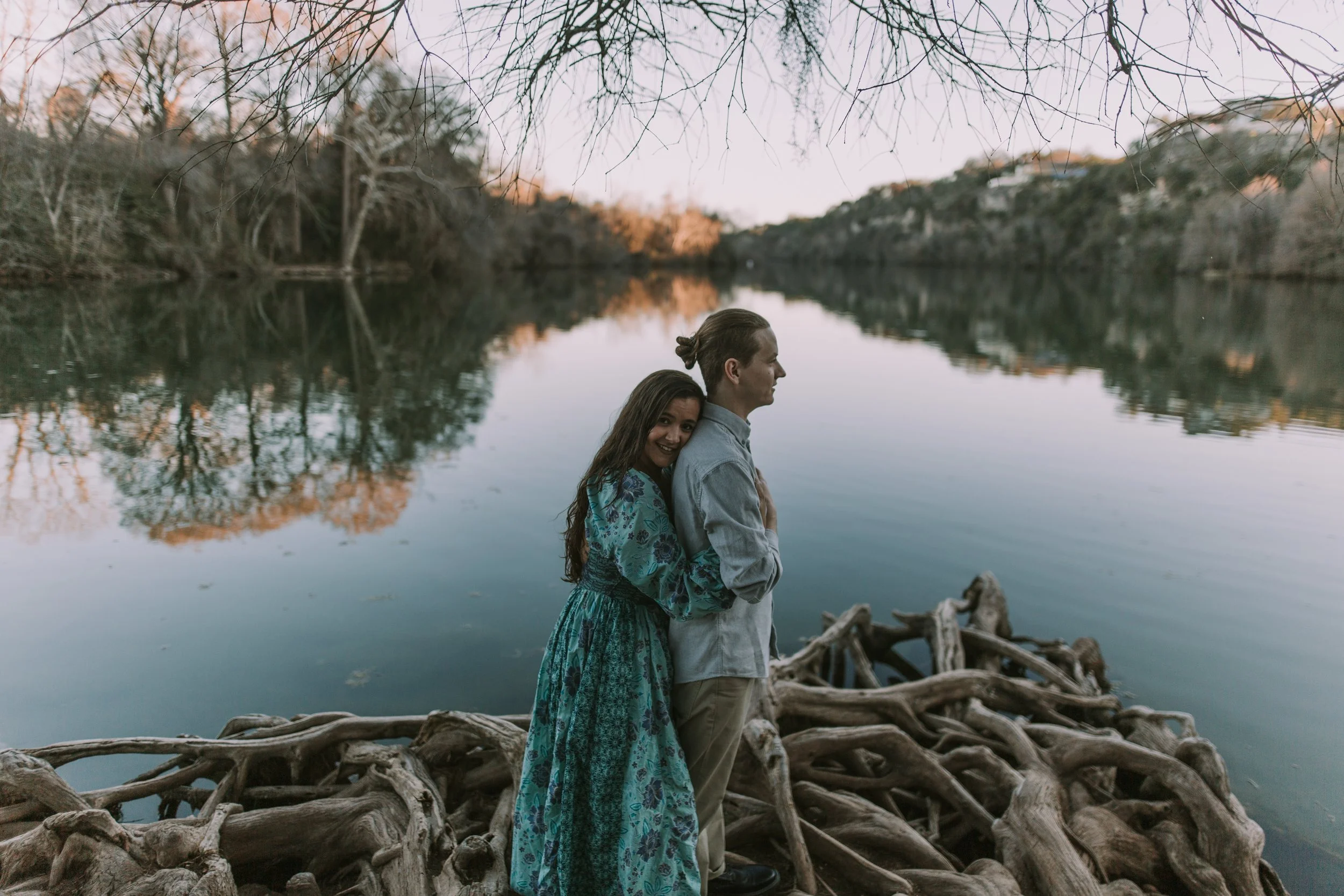
Every spring the roadsides west of Austin turn blue for about three weeks, and our inbox fills with the same question. Where do we take bluebonnet photos, and when. This is the guide we send. It covers the timing, the four spots we return to, the rules that actually apply, and how we shoot a field so it looks like more than a phone snapshot.
When do bluebonnets bloom near Austin?
Bluebonnets peak near Austin between late March and mid-April, a window that usually lasts two to three weeks. The exact timing depends on fall rain and winter temperatures. A wet, mild winter can push first blooms into the third week of March. A dry year can shrink the good window to about ten days.
We start watching the roadsides the first week of March. In a normal year the fields near Spicewood hit full color around the last week of March and hold through the second week of April. By late April the blue fades to seed pods and the afternoon light turns hard. If a session date has to be locked months out, the safest two-week bet is March 25 through April 10. We hold only a handful of bluebonnet slots each spring because that peak is so short, and they tend to fill by January.
Where are the best bluebonnet photo spots near Austin?
The most reliable bluebonnet fields near Austin are Muleshoe Bend Recreation Area, about 45 minutes west near Spicewood, and the ranch drives through the Hill Country near Fredericksburg. Closer to town, Brushy Creek Lake Park and McKinney Falls State Park hold smaller patches worth an hour of shooting.
| Spot | Drive from downtown | Cost | Notes |
|---|---|---|---|
| Muleshoe Bend (Spicewood) | 45 to 60 min | LCRA day-use fee, about $10 | Largest reliable fields, runs to Lake Travis |
| Brushy Creek Lake Park (Cedar Park) | about 30 min | Free | Patches along the trail, easy with kids |
| McKinney Falls State Park (SE Austin) | 15 to 20 min | About $6 per adult, free under 13 | Wildflowers along trails, reserve entry on peak weekends |
| Willow City Loop (near Fredericksburg) | about 1.5 hr | Free public road | A 13-mile scenic drive, roadside public, land private |
Muleshoe Bend is our first pick most springs. It covers roughly 1,000 acres and the flowers run right down to the shore of Lake Travis, so you get color and water in one frame. On weekends we arrive within 30 minutes of the gate opening, because by 10 a.m. the best patches already have a dozen families in them. If you want something quieter and closer, McKinney Falls State Park sits 15 minutes from downtown and has scattered wildflowers along its trails.
Brushy Creek Lake Park in Cedar Park is the easy option for families north of the river. It is free, about 30 minutes from downtown, and the bluebonnet patches sit a short walk from the parking lot along a paved trail, so nobody has to carry a stroller through a field. The patches are smaller than Muleshoe Bend, closer to knee height than waist height, but for a session with young kids that trade is usually worth it. Willow City Loop is the postcard Hill Country drive, but nearly all the land past the fence line is private ranch, so the flowers you shoot there come from the public road shoulder only.
Is it legal to take bluebonnet photos in Texas?
Yes. There is no Texas law against sitting in or picking bluebonnets. The myth that it is a crime has been around for decades and it is simply not true. What is illegal is trespassing on private land, damaging property, or stopping unsafely on a highway shoulder. The Texas Department of Transportation asks that you park fully off the pavement and keep clear of traffic when you pull over for wildflowers.
So the rules are less about the flowers and more about where you stand and how you get there. Five things keep a session safe and welcome:
- Stay on public land or get permission. The blue on the far side of a fence belongs to somebody.
- Park completely off the road. A roadside stop is fine, but not on the shoulder of a 70 mph highway with a toddler.
- Walk in, do not trample. Step between the plants. A field flattened by one careless group is ruined for the next family and reseeds poorly the following year.
- Watch the ground. Spring wakes fire ants and the occasional snake. We carry a blanket and check every spot before anyone sits.
- Leave it as you found it. Picking a few stems is legal. Stripping a whole patch is not neighborly, and it costs the next visitors their photo.
What time of day is best, and what should you wear?
Shoot the hour before sunset. Low, warm light flatters both the flowers and skin, and the crowds thin out after 6 p.m. once the day-trippers leave. We start most bluebonnet sessions about 90 minutes before sundown, which in early April means arriving around 6:30 p.m. That gives us time to walk the field, find the cleanest patch, and settle a nervous kid or a dog before the best 30 minutes of light arrive.
For wardrobe, avoid blue and green so you do not blend into the field. Cream, rust, blush, camel, and warm neutrals all read beautifully against that much blue. Skip busy patterns and any bright logo, since the eye should land on faces, not fabric. A flowing dress moves well in the evening breeze and gives us motion to work with. If you are bringing children, one adult per small child is the honest ratio, and a bag of snacks buys us the extra ten minutes we always seem to need.
Overcast afternoons work too. A thin cloud layer acts like a giant softbox and removes the squinting you get from direct sun, so do not cancel on a gray day. The one condition we do move for is wind above about 20 mph, which turns a field of flowers into a blur and makes long hair impossible.
What if you miss the bluebonnet window?
If the blue is gone, Texas keeps blooming for another six weeks. Bluebonnets fade first, usually by late April, and a second wave of wildflowers takes over through May. A field that looked bare in early May is often full of orange and pink by the middle of the month, so a missed window is rarely a lost season.
The relay usually runs in this order. Indian paintbrush overlaps with the bluebonnets and adds a red-orange streak through the blue, often at its best in early April. Pink evening primrose, the flower most people call buttercups, carpets ditches and open lots through April and into May. Firewheel, also known as Indian blanket, brings a bold red and yellow to the roadsides in May and June, and it handles heat far better than a bluebonnet does. We have shot beautiful sessions in a primrose field in the second week of May, two full weeks after the last bluebonnet dropped.
The practical upshot is simple. If your spring is booked solid, a wildflower session in May is a real option, not a consolation prize. Tell us what you have in mind and we will match the date to whatever is peaking. We drive the same roads near Spicewood and Marble Falls every week from March through June, so we usually know what is open within a day or two.
How we approach a bluebonnet session
Most couples who book a bluebonnet shoot with us are doing it as their engagement session, then pulling frames for save-the-dates. We treat it the same way we treat any engagement session: a slow walk, a few prompts, and a lot of standing back while you forget the camera is there. The flowers are the setting, not the subject. You are.
We keep the group small and the pace unhurried, usually 60 to 90 minutes total, and we shoot low so the bluebonnets fill the foreground and the sky sits clean behind you. If the field near Spicewood is packed on a given evening, we have three backup patches within 20 minutes that almost nobody knows about.
Bluebonnets are a three-week thing. The rest of the year, Austin still has some of the best light in Texas, and our guide to the best engagement photo locations in Austin covers the spots that hold up from summer through fall. If you already know your date, check your availability early. Spring books fast, and we only take a few sessions each April.
Questions couples ask
When is peak bluebonnet season near Austin?
Late March to mid-April in most years, a window of roughly two to three weeks. A warm, wet winter can push first blooms into the third week of March. A dry year can shrink the window to about ten days.
Where is the best bluebonnet field near Austin?
Muleshoe Bend Recreation Area near Spicewood, about 45 minutes west, has the largest reliable fields and runs right down to Lake Travis. McKinney Falls and Brushy Creek Lake Park are closer patches worth an hour.
Is it illegal to pick bluebonnets in Texas?
No. There is no Texas law against sitting in or picking bluebonnets. What is illegal is trespassing on private land, damaging property, or stopping unsafely on a highway shoulder to reach them.
What time of day is best for bluebonnet photos?
The hour before sunset. Low, warm light flatters the flowers and skin, and the crowds thin after 6 p.m. We start most sessions about 90 minutes before sundown so we have time to find a clean patch.
Do you need a permit for bluebonnet photos near Austin?
Roadside stops and LCRA parks like Muleshoe Bend do not require a photo permit, though a day-use fee of around $10 applies. Some botanical gardens restrict professional sessions, so confirm the policy before you book.
What should we wear for bluebonnet photos?
Soft, solid colors that are not blue or green, so you stand apart from the field. Cream, rust, blush, and warm neutrals read beautifully against all that blue. Skip busy patterns and bright logos.